
“I have several posts that have brought up the human stress response going back to 2015 but there is plentiful research dating back 50 years or more on the human stress response and autonomic dysregulation. I believe strongly that unregulated sympathetic arousal can lead to a decline in physical well-being as the literature guides. The human cost of stress has been well studied and the effects of stress are a well-known cause of cardiovascular illness including heart attack, hypertension, and stroke and a host of others. It is now known that the brain plays a big role in all of this.” In other posts I have cited the work of Hans Selye who is considered the father of stress awareness.
Stress is a cumulative response to exposure to threatening, fearful, or chaotic scenes. It is especially important that cops are able to quickly assess violent scenes to provide best and most timely action.
Active shooter protocols require that teams of officers are not distracted in their search for the shooter; sometimes stepping over victims along the way. It can become impossible unless they are laser focused and disciplined. “Officers are trained to be vigilant and alert and push past feelings of fear. The job demands it. But these expectations, mixed with chronic exposure to stress can make officers hypervigilant and hyperalert even during moments of calm.
The stress of police work doesn’t suddenly disappear when a shift ends” as reported in Powerline on Law Enforcement, published in August 2023. Whenever I have participated in an after-incident review or formal defusing/debriefing, I rarely have an officer raise his or her hand when asked “did any of you experience significant stress during this call?”
That is to be expected to some degree but it reflects a hesitation of officers to acknowledge strong reactions from the work they do and can suggest a problem.
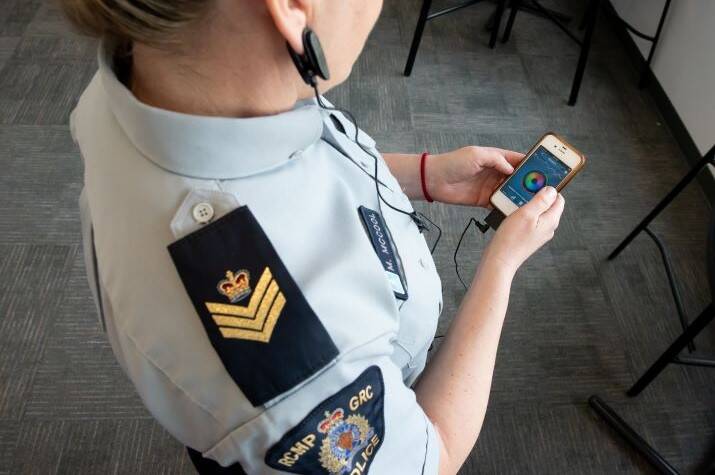
“You have to breathe anyway, so you might as well learn to breathe in a way that works for you,” says McCool, referring to the use of rhythmic breathing and the ability of the heart to synchronize the body and the brain to increase energy and mental clarity, and to feel better. In RCMP literature. Image by Martine Chénier, RCMP
Honest reporting on call-related stressors like an officer involved shooting, fatal car crash, sudden cardiac event in another officer, or domestic violence should leave any one of us in an elevated state of stress. This comes from our brain’s response to fear-producing events that all human beings experience and takes as long as 24 hours to return to normal. Over time, stress levels can remain in a constant pattern of elevation from repeated exposure to traumatic events.
Some say police officers can be taught to reduce the effects of high stress call to 60 minutes with training. But is training available for these types of techniques?
The Royal Canadian Mounted Police have been ahead of the curve in many ways.
The RCMP in western Canada train for lowering stress during high stress responses. Mental-health workshops are already mandatory for all RCMP employees and there are many resources in the organization. Officers are slowly coming to see the value of talking with a professional for mental health well-being. “There’s a need for programs like this” says RCMP’s Superintendent Rick Burchill. “Every police officer, one way or another, will face some stress and this gives people one more tool they can use.”
The problem with that is that many agencies with high call volume do not have the manpower to allow one of more officers to sit on the sideline as their stress response slowly trends down to normal. Men and women in law enforcement, like those in the military, are vulnerable to chronic stress and many do nothing to mitigate this vulnerability.
For career hardiness, it is essential that law enforcement officers manage their stress. This means regular exercise, a healthy diet, and stress awareness and mindful lowering the body’s elevated fight-flight response. Especially after exposure to the gut-wrenching calls that regularly come across the police scanner.
Well-established research has shown that low-level daily stress can create such intense wear and tear on our body’s physiological systems that we see accelerated aging in our cells, says Elissa Epel, M.D. who co-wrote the book Epel added: “Mindfulness-based interventions can slow biological aging by interrupting chronic stress, giving us freedom to deal with demanding situations without the wear and tear — and giving our bodies a break” as described in the Washington Post article authored by Jamie Serrano on June 29, 2024.
In my experience, the techniques of mindfulness have an impact on lowering self-regulation described in most literature. The drawback is a lack of carryover and limited positive practice. It is not for everybody but it can be one part of a comprehensive goal of self-care and emotional resilience needed for long-term career success. The importance of this practice can not be overstated when cops jump from one call to the next. I offer individual biofeedback sessions to lower the body’s sympathetic activation that often ramp up at times of threat. For many in law enforcement, the experience of being under threat never goes away. This can hurt.
In the Spring of 2024, I was involved in a Zoom presentation on the important ways to unpack stress and its cumulative impact on physical and mental health offered by Whittier Rehabilitation Hospital in Westborough, MA. Like everything in the new year, innovative ideas and habits are hard to stick with.
Building discipline is easier when one becomes committed to educated on what stress can do to our bodies and committed to using our skills to limit the daily accumulation of adrenaline and cortisol and recognizing the signs of an abnormal stress response. Things like poor sleep, irritability, excessive use of alcohol or drugs, forgetfulness, overeating, lack of exercise, isolation, etc. We all do these things at times, we are human. But when you find yourself going off the rails, and are not taking proper care of yourself, it may be a sign of a growing stress response that may lead to depression, anxiety, and a host of physical conditions like hypertension, heart disease, stroke, autoimmune disorders, obesity, and diabetes. A balance of work and personal life should be part of any stress lowering plan. It becomes especially important to pull yourself back into your routine. Things like exercise, nutrition, mindfulness lowering alcohol intake, regular sleep, and maintaining family and social connections become key tasks to help you feel better and lower shame and guilt.
“One of the major findings in a study on paced breathing is that there is a dramatic difference in brain activity in the amygdala and hippocampus during inhalation compared with exhalation,” said lead author Christina Zelano, assistant professor of neurology at Northwestern University Feinberg School of Medicine. “When you breathe in, we discovered you are stimulating neurons in the olfactory cortex, amygdala and hippocampus, all across the limbic system.” And this all makes great sense to anyone who has had to clear a dark building in which an armed suspect has taken cover.
The stress response has enormous impact on both psychological and physiological functioning. To live long we should take this seriously. I admit I don’t do mindful exercises enough. This post, and others like, it will offer step-by-step recommendations to lower stress and build better self-regulation eventually. This helps with anger control too. Meanwhile, clients with whom I work tell me how much better they feel after 2 weeks of mindful, paced breathing. It is very simple and can impact your health in positive ways. But people often stop the mindful exercises once they start to feel better. That is the problem with the simplicity of this protocol. We all have to breath, we might as well learn to do it the right way. I love this quote from RCMP Sergeant Marie-Josée McCool at RCMP. This post and the descriptions of the fight-flight mechanism are for everyone not just members of the first responder profession. We can all use an autonomic adjustment now and then.
 Stress Response and Human Behavior
Leave a comment