

The co-responder model has grown such that many, if not all, police agencies have ride-along mental health specialists for cases of mental health emergencies. The gap left by deinstitutionalization in the 1970’s was now being managed by police officers with no clinical training and no alternatives to arrest. I was once told that fifty percent of the call volume in a local city police department by its police chief. That said, the responsibility for managing these calls has never been more complex. What started out primarily as jail diversion has cascaded into a 24 hour daily mental health and substance abuse clinic on wheels and officer training on “what is mental illness”?
So what has changed?
The problem is that no single behavioral health specialist paired with a member of law enforcement can be expected to understand, counsel, and divert the number of cases police encounter on a daily basis. And aside from Boston, few departments have co-responders, 24/7. In Watertown, MA, the former police chief Michael Lawn told me that half or more than half of their calls for service involve people with suspected mental illness or serious substance abuse. And more often than not, there is no place to bring them once they are diverted from a jail cell. Many co-responder agencies like Riverside Community Care in Dedham, MA have emergency support including emergency MH beds available 24 hours a day.
Historically, jails and prisons became de facto mental health institutions following the deinstitutionalization movement of the 1960s and 1970s. This dramatically reduced state hospital beds without a corresponding and necessary expansion of community-based treatment. As a result, law enforcement officers, courts, and correctional facilities were left to manage individuals whose primary needs were clinical rather than criminogenic. Recognition of this systemic failure led to the development of diversion protocols designed to intervene earlier and more effectively.
Over the past several decades, jurisdictions have sought to divert individuals with serious mental illness away from incarceration as MH advocates pushed for keeping them from behind the walls. This is not universal because most of the people in jails have a mental health diagnosis; and most were not getting the care they needed. Rather than treating violent police encounters with the mentally ill as anomalies, the Memphis PD leaders in 1988 admonished a “systemic problem rooted in deinstitutionalization”; police were being asked to manage psychiatric crises without the tools, training, or partners to do so safely. But that was soon to change.
The seminal development in this effort was the Memphis Model of Crisis Intervention Team (CIT) policing, first implemented in Memphis, Tennessee, in 1988 following the fatal police shooting of a man with mental illness. The Memphis Model emphasized specialized police training, collaboration with mental health providers, and rapid access to psychiatric services, establishing law enforcement as the first critical intercept point in diverting individuals toward treatment rather than arrest. This model became the prototype for subsequent diversion programs nationwide. The entire premise relies on collaboration between the police, mental health, probation, and the private sector. My experience has been that many programs lack true buy in from agencies especially those who have a high prevalence of call involving those with suspected mental illness. I have seen the program work exceptionally well, see San Antonio CIT training.
While the classic Memphis CIT model emphasizes specially trained officers, it laid the groundwork for modern co-responder models where police respond alongside clinicians, social workers, or crisis specialists—especially in high-risk calls.
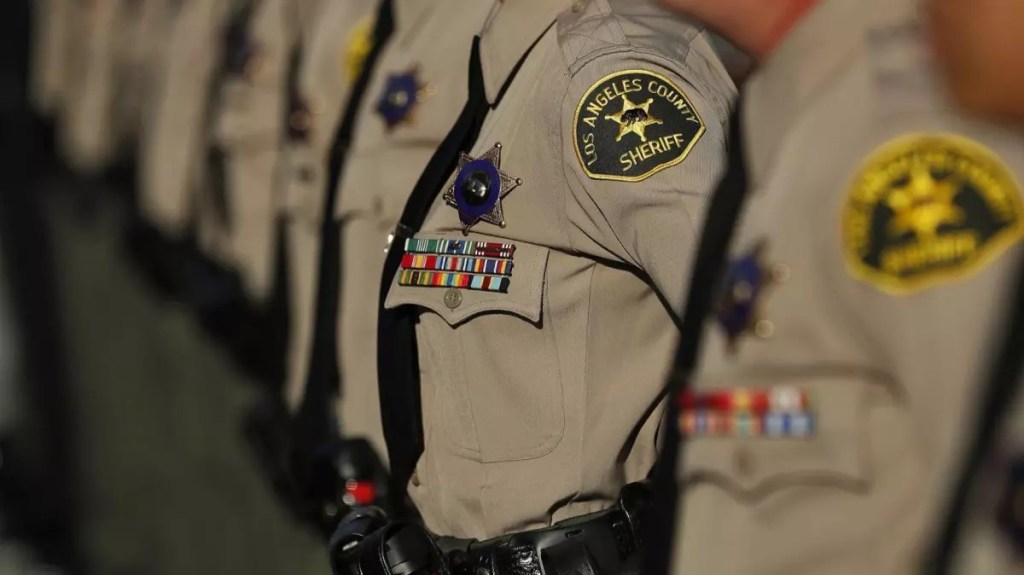
Early in their careers, officers often internalize a “prove yourself” mindset. The academy and field training environment reward decisiveness, toughness, and emotional control. In departments across the U.S., Canada, the U.K., and Australia, that culture has historically discouraged visible outward signs of vulnerability. However, organizations such as the International Association of Chiefs of Police and the National Alliance on Mental Illness have increasingly emphasized officer wellness, peer support, and trauma-informed leadership. Many agencies now incorporate structured debriefings, crisis intervention resources, and peer support teams to normalize stress reactions rather than stigmatize them.
The risks associated with system failure were illustrated by a fatal officer-involved shooting in Westbrook, Maine, in November 2024. I know that Westbrook PD use the co-response model. In that incident, officers shot and killed a 37-year-old man who violently resisted being taken into custody. The individual had an active arrest warrant and was known to be assaultive, but he was also diagnosed with mental illness. Such cases underscore the complex intersection of public safety, officer risk, and untreated psychiatric instability, and they highlight the consequences that can arise when judicial, clinical, and enforcement systems are insufficiently aligned.
Advocates of reform argue that more robust court-ordered treatment pathways—implemented earlier and enforced consistently—may reduce the probability that police encounters escalate into deadly outcomes for both civilians and officers.
Building on these early efforts, policymakers and researchers advanced what is often referred to as the Sequential Intercept Model (SIM)—sometimes described as a correspondence or continuum model—which conceptualizes the criminal justice system as a series of intercept points where diversion to treatment can occur. These intercepts range from initial law enforcement contact (Intercept 1), to initial court hearings and jails (Intercept 2), to courts and reentry processes (Intercepts 3–5). For diversion to function effectively, treatment resources and coordination must be available at each of these points, ensuring continuity of care rather than episodic or fragmented intervention. As emphasized in a July 2015 NPR–Kaiser Health News report, diversion is most successful when cities and counties invest in treatment programs across the entire justice continuum, rather than relying on isolated or single-stage reforms.
States such as Maine are increasingly reforming court-ordered mental health systems in an effort to reduce the likelihood of rapid escalation and the use of lethal force during law enforcement encounters. These reforms reflect growing recognition that traditional arrest-and-detention models are often ill-suited for individuals whose primary risk factors stem from untreated or poorly managed mental illness. By strengthening civil commitment procedures, treatment mandates, and coordination between courts, clinicians, and law enforcement, states aim to intervene earlier and more effectively—before encounters reach crisis levels.
Key References
Steadman, H. J., Osher, F. C., Robbins, P. C., Case, B., & Samuels, S. (2005). Prevalence of serious mental illness among jail inmates. Psychiatric Services, 56(6), 761–767.
Compton, M. T., Bahora, M., Watson, A. C., & Oliva, J. R. (2008). A comprehensive review of extant research on Crisis Intervention Team (CIT) programs. Journal of the American Academy of Psychiatry and the Law, 36, 47–55.
Munetz, M. R., & Griffin, P. A. (2006). Use of the Sequential Intercept Model as an approach to decriminalization of people with serious mental illness. Psychiatric Services, 57(4), 544–549. NPR–Kaiser Health News. (2015, July). When jail is the hospital: The mental health crisis behind bars.
The entire premise of co-response relies on collaboration between the police, mental health, probation, and the private sector. My experience has been that many programs lack true buy in from agency hierarchy.
 Stress Response and Human Behavior
Leave a comment