

12 minute read
This is written In response to Acton, Massachusetts murder-suicide of a 16-year-old high school girl walking home from school that occurred on June 25, 2024. I warn readers that some of the story will be traumatic.
Domestic violence homicide (DVH) and missing the danger signs from the terminal event (TE) in the case of child murder.

There were over 20 domestic violence homicides here in Massachusetts in 2024. The events of the murder/suicide involving a 16-year-old girl and Juliano Santana her stepfather in Acton, MA are the despicable results of a failed domestic violence protection order. Too many details are missing as to what triggered Julio Santana to go and find his stepdaughter and murder her? This is an unfortunate but common outcome with GPS monitoring and too many orders of protection. What is said to be high technology is minimally effective. It did nothing follow the movement of accused rapist and sex offender Juliano Santana and protect the victim from death.
Incidentally, I made a formal request for the police report under Freedom of Interest and received only the press release from the department.
We can now track persons of interest, like our children, on existing cellular technology. We can track the school bus in real time and see where it is dropping off kids on their way home from school. Had this live tracking been in place the movements of Santana would have been intercepted as he made his way to murder his stepdaughter. As she walked home from school in June 2024 Santana drove along her route of travel and found her. His intention was to silence her from testifying about his alleged sexual assault of her that began when she was just 11 years old.
A survey from the Centers for Disease Control and Prevention found that nearly half of women in the United States have experienced sexual violence, physical violence, or stalking from an intimate partner in their lifetime. Among those, three quarters of female victims reported that they were first victimized before the age of 25. One in three women in the US have experienced severe physical violence by an intimate partner. Abuse typically begins in small, subtle ways and escalates over time, according to Jane Doe Inc., the Massachusetts Coalition Against Sexual Assault and Domestic Violence. More must be known about perpetrators of domestic violence. Additionally, few studies have examined perpetrator-reported motivations for DVH, along with victim’s and co-victims’ experiences of attempted or completed DVH as reported by Harden et al. 2019.
The perpetrator in this story was alleged to have raped his then 11-year-old stepdaughter and was out on bail. The GPS ankle bracelet did nothing to prevent her murder and keep the child safe. It was not actively tracking his movement as he traveled to the girl’s high school in a clear violation of the protection order. If GPS had been monitored in real time, the police would have had a head start on Santana. For five years the victim lived in fear that Santana would come and kill her. Her bravery and courage to come forward at age 11 was exemplary but that did not keep her safe.
The bail money did nothing to prevent the actions of that day and now the money will be returned to the person who posted the bail since he is now deceased. Neither did a threat of bail revocation deter the terminal violence in Acton on that horrific day. After death the assailant is unlikely to care about its revocation. His anger forced him to kill his step-daughter and himself in penultimate control over the case and its outcome.
This case requires a careful psychological autopsy to innumerate the violations of his conditions of bail and provide an upgrade to the ankle bracelet system and to innumerate the red flags that were missed. Long before Santana decided to kill the little girl, his despicable defense strategy was to keep pushing the trial out month after month asking for continuance. The goal to reign terror on her every waking moment so she would not testify or she might move away.
The courage shown by the 16-year-old girl is a testament to the victim witness advocate assigned to her case. We hear very little about the advocates that handle cases of child rape like this one. The advocate would explain to the victim why the defense needed more time to “prepare” for trial and she would support the child and her family. Every time a trial date is moved it likely reset the fear and trauma for those expected to testify, like this child. This is a common strategy by those who defend these loathsome men. It aims to discredit witnesses with continuous lies and intimidation.
Remember, the victim was 11-years old when Santana was alleged to have first sexually assaulted her. She wanted to end this ongoing trauma as much at Santana did. But she did not waiver in her resolve that she was raped when just 11 years old. Kids do not make that stuff up.
The problem with looking at the case of a deceased rapist like Santana, is that there is no one to prosecute. Case closed right?
This case deserves the post-mortem psychological analysis that would have generated facts which can add to the domestic violence literature and will provide accurate risk assessment for other perpetrators like Santana, Stephen Lake in Dexter Maine, and a former cop from Austin Texas named Broderick – three murderers who premeditated homicide in the past decade. Three bad guys who killed their accusers while the stay away order was in effect.
The law should include this detailed data collection and case review when a domestic violence homicide occurs. In each of these cases data was missing. There is so much to learn about DVH in the aftermath. All states have annual review boards and report the statistics and make recommendations. There is a case to be made for careful analysis of behavioral health functioning of abusers even holding them without bail. That seems to be common sense, right? But this rarely occurs. As a law enforcement officer in Massachusetts, I tried to introduce risk assessment tools like Lenore Walker’s instrument, to quantify a subject’s potential for violence. Many believe this is important but is not yet universally adopted here in Massachusetts.
Now 14 years on, the psychological autopsy conducted in 2011, looked at the red flag warnings that are common to DVH everywhere – including cases in Maine and Texas. What brought my attention to the case in Maine was the purported prosecutorial impotence assuaged by District Attorney Christopher Almy, who said publicly, “there was nothing that could be done to protect the victim, Amy Lake and her two children, from her estranged husband Stephen Lake. He was wrong then and is still wrong in 2026. In fact, Maine just passed a red flag law that permits the removal of weapons after times of domestic violence. Our report in 2011 recommended this strategic thinking but it was not added to legislation taken up by the legislative body in Augusta.
This change in law comes only after a mass shooting in Lewiston Maine in which 18 people including children lost their lives. Guns were not removed from the murderer in that case and 18 lost their lives.
The reason more needs to be done following a murder suicide is because there are all-too-often missing details that many believe may bring forth a host of facts that may be used in processing individual cases of DVH. When restraining orders are requested – all details must be investigated for judges to sign off on the order of protection.
And LEO’s must get better at writing their reports because judges are not the best at deciding who should get a restraining order. In our report in 2011, it was pointed out that judges need as much training and education on domestic abuse and violence as district attorneys and members of law enforcement. As trial dates near and or formal divorces are affirmed the cases become a high risk for homicide-suicide. When DVH takes place there is data collected at the scene but facts about antecedent behaviors are missed. More data is collected when interviews of survivors are obtained including the family of the murderer. “Data is collected when broad interviews include co-workers, friends, family of the victim, parents of the assailant, and more” according to Ron Allanach et. al (2011).
In early 2021, the police in Austin, Texas were beset by a horrific case of domestic violence homicide. On April 18, 2021, a former police officer killed his family while picking up his son for a monthly supervised visit. The child’s mother encouraged these visits because she saw them as important to the boy’s development and relationship with his father. For his part Detective Broderick was a violent and sadistic father. While exchanging pleasantries, the child’s father shot and killed his former wife and stepdaughter. And he killed his daughter’s young boy friend and immediately fled. Detective Broderick was captured 20 hours later and is being held. A family friend remarked, “I kind of had a feeling that this is where he was going, because he was lost,” she explained. “He lost everything. He lost his family. There was a protective order for a reason.” He was felt lost. And this family friend did nothing to forewarn the local police that one of their own was a high homicide risk. This is a story that rings true in so many cases of DVH. Someone usually knows – and says nothing.
The thirty-thousand-dollar bail was an insignificant deterrence against intimidation and violence. Bail is not for the purpose of protection of witness or victims of crime; bail is money that guarantees the accused will appear in court at the time of his trial. Not until they were both dead, did the ankle bracelet worn by Santana reveal his location to police. If it had been a “real time” GPS monitor it would have caused an alarm to go off at probation and say he is in violation of the court order and must be arrested. Once they tracked his whereabouts it had become clear that a high school girl had been kidnapped and was in grave danger. The GPS monitoring was not done in real time. If it were then monitoring would have signaled ahead of the killer’s diversion toward the victim’s school or her place of living. Probation GPS monitors did not tract Santana and did not protect the young girl. They did not notify or protect the victim. When the whereabouts of Santana were picked up by the Department of Probation, the victim was likely with the offender and most likely already deceased.
This paper was started in the aftermath of a murder suicide here in Massachusetts as it occured in Acton, MA described above. This despicable case flew under the radar because the criminal trial of the accused was re-scheduled 3-4 times and was finally headed toward the court room before the murder. Every change in court date is enough to put a frightened victim into crisis. Many child victims change their minds about testifying and blame themselves for breaking up the family. Children often do not have the psychological resilience to testify. This is the solid defense tactic to keep the family and principally the victim in chaos. They often are too afraid to stand up and admit what was done to them. They feel deep shame and responsibility as years have gone by.
I am a former police officer and sat through several SANE interviews that were heart breaking. I am currently a Massachusetts licensed psychologist working in here in Massachusetts. When I patrolled the city or town, I frequently stopped at houses known to us for domestic violence in the ‘aftermath’ of the calls, after things had settled down and the dust had cleared. We turned this into a mandate for all officers. Stop and try to connect with the couple following a call for domestic violence. Our officers would follow-up on recommendations that may have been offered, like counseling. And let them know help is available. Some take the advice that is offered other families pack up and move.
In this case, Northeastern University School of Law Professor Margo Lindauer says more could have been done to keep this victim and others safe. Her quotes below come from the WCVB-TV interview in 2024.
“This is an issue in the system that these cases are not prioritized. There are not enough district attorneys, there are not enough lawyers to lawyer the cases and the cases are pushed,” Lindauer said. “As far as we know the mother did everything, she could to protect her children, and it wasn’t enough. Parents should not be responsible for keeping their children safe. They are not a match for a violent man who is a ticking time bomb. In truth this is an example of the dangerous felon who needed to be in prison. And that is something the Massachusetts system must take responsibility for” and changes must take place. The Centers for Disease Control and Prevention, National Intimate Partner and Sexual Violence Survey (NISVS) 2016–2017, which found that 47.3% of women in the United States have experienced contact sexual violence, physical violence, and/or stalking by an intimate partner during their lifetime.
More needs to be done to protect child victims from known violent perpetrators such as Juliano Santana, who killed a 16-year-old girl just days before she was to begin her summer vacation, a time of fun and joy for most high school kids. The victim lived in Acton, Massachusetts. The laws that protect children must expand for options to contain the alleged rapist. Once it is determined that sufficient DNA evidence exists that links the stepfather to the child’s rape he may be held without bail pending the psychological evaluation. Child victims like this 11-year-old child often blame themselves for being assaulted or when groomed for sex. They grow up afraid and often isolated. They lack the developmental maturity to fully understand what happened to them and how to move on. Many victims live with recurring fear that the rapist is going to come back and hurt them again or kill them next time. This is exactly what happened.
Some think children should not be expected or required to testify in court when the crimes occur before their age of maturity, like age 11 when this victim was first attacked.
Certainly, they are interviewed by a team comprised of law enforcement officers, social service, and sexual assault experts. The MA SANE Program cares for individuals (patients) of all ages through several service delivery models (Mass.gov). This includes in-person SANE and now TeleSANE services for adults and adolescents and in-person Pediatric SANE services provided at Children’s Advocacy Centers across the Commonwealth. I have participated in a few of these interviews, and they are gut wrenching for all involved especially for a child victim.
Children who experience severe traumatic events like childhood rape often experience signs and symptoms of post-traumatic stress disorder as they grow and mature. They carry the shame sometimes for as long as they live. Perpetrators like to blame the victim – even one who is 11-years old at the time of the sexual violence. And sadly, there are defense attorneys whose sole purpose is to shame the victim and render her unbelievable and even responsible for the despicable abuse. These men should not be permitted to use this approach as it revictimizes and whenever they use it, it leaves everyone in the court room, including the judge, feeling sick to their stomach.
The media portrayal the horrific events in Acton in June 2024 has unanswered questions on how the perpetrator avoided being captured before he got to his victim? There should be an answer to this question. It is missing. It sounds as though the police were not given any lead time from the GPS monitoring. Another missing fact is where did the firearm come from? The police probably know where the firearm came from but guns can be hidden and not taken by police agencies. And how did he stalk his victim to have knowledge of her route of travel when leaving high school.
Under state law, prosecutors cannot request a hearing to determine if someone is dangerous and should not be released on bail in cases involving egregious cases of child rape. As a licensed psychologist here in Massachusetts and I have done research on DVH and find it necessary to draft reports that highlight the possible murderer’s unpredictable violence and his poor impulse control. Certainly, the probation department looks at the perpetrator’s prior criminal history in making recommendations for bail. There were times when I made an arrest for DV and found that one or more RO’s (restraining order) were in place that other women had taken out on the perpetrator like a former wife or girlfriend. Does that sound outrageous? It is likely that Mr. Santana had no criminal history and thus he was released on low bail or no bail. Although we have not been told this fact. We do know that Juliano Santana drove to Acton with one thing in mind – to shoot and kill the 16-year-old girl whom he first violated 4 years prior. When all-along, he should have been in a holding cell until he received a risk assessment.
We conducted a psychological autopsy on Stephen Lake, age 37, a man in northern Maine who murdered his wife and two children. This occurred just days before their divorce was to be finalized and two weeks before he was to be tried for criminal threatening. Steven Lake was from Wellington, Maine. He was known to be violent toward his wife and daughter. He expressed the wish that their daughter was adopted away soon after she was born and got pleasure tripping her and calling her names. He held his family at gunpoint for 2 hours threatening to kill Amy Lake if she were ever to be with another man. For her part, she knew he would kill her. The request for an order of protection stated just that.
By all accounts, Amy Lake then did everything “right, just like the mother in Acton Massachusetts.” After she and her children were free, she called a counselor, who notified police and had Steven arrested according to Allanach et al. in the published psychological autopsy of this horrific event. Steven Lake faced four charges, including criminal threatening with a dangerous weapon and domestic violence criminal threatening. He violated the order of protection over five times with impunity. “His firearms were not taken from him as required by law. He had over twenty guns to choose from when he made his move. This is what happens in systems where defense lawyer argues about eighth amendment rights to “reasonable” bail in lieu of consideration for a traumatized victim and her family” said Nicole Bissonette in Maine Law Review in 2012. Lake was released on two thousand dollars bail paid by his father. The quick bail issue is perhaps the most apparent way that the PFA (restraining order) system failed Amy Lake as it did the victim in Acton, MA.
On November 11, 2010, just a few months after holding Amy and her children at gunpoint and threatening their lives, Steven Lake was charged with violating the PFA by allegedly having contact with Amy. Though he faced these new charges, Steven Lake was again released on $2,000 cash bail. Had he been held until trial the Lake family may continue to live today. Just as the case in Acton, had a dangerousness hearing been held this child may still be alive.
He was sitting in our room with a loaded gun and started talking about hurting himself and/or myself and children.
He was bringing up past verbal threats he has said to me and I felt they were all going to happen and he would kill us all”
-Amy Lake Protection from Abuse Order reference to the 06/14/10 incident at Wellington, ME.
SUMMARY
What modern society leaves its children at considerable risk for death in crimes like these? There were most certainly red flags that the perpetrator waved in the days and hours before this kidnapping and murder in Acton. His anger was likely very high and not fully appreciated by law enforcement. As the trial date neared, Santana was probably afraid too that he would be found guilty and sent to prison. Santana could not allow the victim to take control of his life by testifying to the things he did to her. That would be a problem in jail. And so, he took control of her life and killed her. And in an act of cowardice, he shot himself to death.
“The psychological autopsy is an individually designed case study that elicits a broad range of factual data regarding the behaviors of a decedent in the immediate day or days leading up to domestic violence homicide. The study is especially important when first responders and essential workers are involved. Likely, the victim lived in fear and terror” and each time the defense was given extra time to prepare it brought the victim further trauma” according to Michael Sefton, Ph.D. at the Police Psychology Program in Westborough, MA.
The crime of child rape is a de facto demonstration of violent sexual behavior. A dangerousness hearing and at very least should have been held prior to the release of Santana. His thirty-thousand-dollar bail bond was probably only three thousand dollars cash (ten percent cash) although I am not sure of this. I would like to know who put up the bail money and what they knew about Santana’s violent plan for the murder/suicide. Had he threatened his victim, or others? Usually, someone knows what is likely going to happen. I would start by speaking to the person who paid the bail and the person who purchased the firearm. These are two key interviews that would uncover Santana’s level of desperation and rage.
The victim’s family could tell us just how terrorized she was in the aftermath of the sexual assaults. Her family knows what torture she felt with each postponement of the case. My experience is that when victims are found to be emotionally strong enough to testify against a parent or stepparent that this should be done as soon as possible. I am sure someone from the district attorney’s office was keeping her appraised of the court date and very likely supporting her and family in the months as the trial neared. Her fear of testifying against Santana was probably palpable in her daily life and no one should be forced to live under such circumstances.
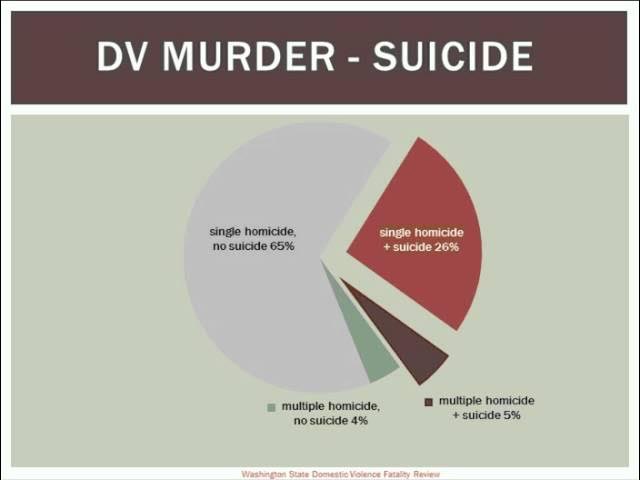
This event should embolden the Healey administration and the Governor’s Council here in Massachusetts to better understand domestic violence and the changes in bail conditions and probationary intervention tools needed to save lives here in Massachusetts. The psychological autopsy will assess the individual idiosyncrasies of cases and will elicit a broad range of factual data regarding the behaviors of the decedent perpetrator in the immediate days and hours leading up to this horrific event and the times he violated the order of protection. We can learn a great deal about domestic violence and the common red flags to watch for and the red flags that elevate the risk to victims. In doing so, there will be fewer cases domestic violence homicide. Governor Maura Healey, there should be a psychological autopsy on Julio Santana to understand the changes in his violent proclivities that became more volatile in the days leading up to his criminal trial. At what point did he decide to kill his victim and take his own life? The clock was ticking down on the start of this trial and sadly, on the life of this young victim.
The psychological autopsy will collect only factual interview data from people that knew him, his family, coworkers, and others, to ascertain the likelihood and what red flags may have existed in the days and hours prior to the terminal event. The findings will add to the body of knowledge that we collected in our research in Maine for a decade ago and even now is timeless.
Ronald Allanach et al., (2011) https://themainemonitor.org/wp-content/uploads/2011/12/Dexter-DVH-Psychological-Autopsy-Final-Report-112811-111.pdfPsychological Autopsy of June 13, 2011, Dexter, Maine Domestic
Violence Homicides and Suicide: Final Report 39 (Nov. 28, 2011),
http://pinetreewatchdog.org/files/2011/12/Dexter-DVH-Psychological-Autopsy-Final-Report-112811-
111.pdf.
Harden, Jacqueline, BS, Du, Jingshuai MS, Spencer, Chelsea M., PhD, Stith, Sandra M., PhD, (2019)
Violence and Victims, Vol. 34 Issue 6, Dec, DOI: 10.1891/0886-6708.VV-D-18-00128
Nicolle Bissonnette (2012) DOMESTIC VIOLENCE AND ENFORCEMENT OF PROTECTION FROM ABUSE
ORDERS: SIMPLE FIXES TO HELP PREVENT INTRA-FAMILY HOMICIDE, Maine Law Review Vol. 65 :1
Domestic Violence Cases, SUN JOURNAL (Nov. 28, 2011),
http://www.sunjournal.com/news/approved/0001/11/30/report-details-dexter-family-murder-suicide-
calls-for-new-way-of-handling-domestic.
21. Obituary for Amy, Coty and Moni
 Stress Response and Human Behavior
Leave a comment