

Michael Sefton, Ph.D.
I have worked with older clients for over 25 years first as a post doctoral fellow at Boston City Hospital – now BUMC. Long before the pandemic, my work at Whittier Rehabilitation Hospital has been to offer support and direct service to patients’ suffering from debility linked to decline in physical health along with the psychosocial needs and challenges. All too often, this includes feelings of loss of control, loss of a loved one, and sadness that is palpable in our short conversations.
Many seniors feel invisible and have not close friends or relatives. Declining health further instills the loss of purpose and amplifies the stigma of being seemingly infirm. The lack of purpose germinates from time around retirement, the passing of a spouse, loss of close friends who move or have died, food and financial insecurity. It precedes a decline in personal well-being and sometimes a veiled “death wish” and it’s associated demoralization.
“The greatest risk in aging is not simply illness or decline, but the experience of becoming unseen, unnecessary, and disconnected”
(Holt-Lunstad et al., 2015; Perissinotto et al., 2012; Van Orden et al., 2010; Cacioppo & Cacioppo, 2018).
My mother was infected with the coronavirus in mid-April 2020 before the vaccine was introduced. She lived in the same nursing facility where I lost my 93-year old aunt in the first wave of the coronavirus in May 2020. My mother survived the virus but it took a significant toll on her physical and cognitive well-being. She passed away in January 2024 after her recovery. My aunt was alone on May 1 when she succumbed to the virus in 2020. We were not permitted to enter the facility during times when the coronavirus was particularly virulent and we were unable to speak with my mother about her sister’s death. I am not sure my mother ever understood that her sister died while the entire building was inflamed with coronavirus. I know she was told but I never saw the grief I expected.
The Bethany Healthcare organization was outstanding in the care they provided before, during, and after the pandemic. The staff are skilled, dedicated and understanding about the stress families experience in the last months of their loved ones time on earth.
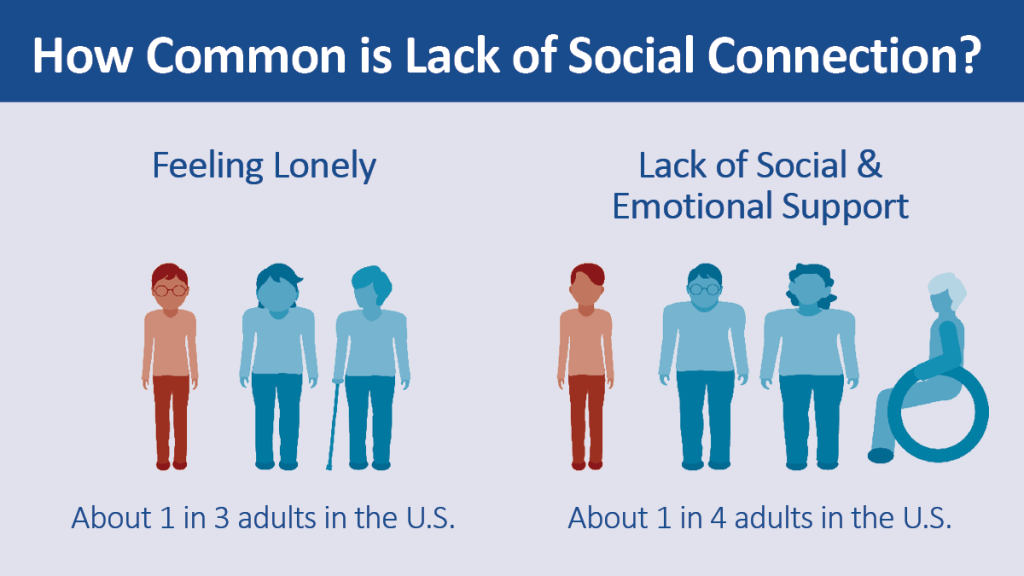
“Loneliness” is subjective feeling of disconnection; “social isolation” is objectively having few interactions — both are harmful, though they don’t always occur together according to a CDC report.
Understanding the Emotional Impact of Illness on Seniors
Just like younger patients, loneliness and social isolation in older Americans are serious public health concerns putting them at risk for dementia and other serious health conditions including failure to thrive, sepsis, malnutrition, addiction, and mental illness according to a CDC report. When a loved one goes for days or weeks without seeing anyone it creates a significant risk for both physical and mental distress. When older adults lose independence, especially the ability to carry out basic or instrumental activities of daily living (ADLs/IADLs), it often triggers a profound shift in identity. Research in gerontology consistently shows that loss of autonomy is one of the strongest predictors of psychological distress in later life.
Loss of autonomy in old age is often one of the most psychologically destabilizing aspects of aging. As physical strength declines, chronic illness progresses, or cognitive changes emerge, older adults find themselves increasingly dependent on others for basic activities of daily living. This shift can disrupt long-held identities built around competence, productivity, and self-reliance. The need for assistance with personal care, mobility, finances, or medical decisions may evoke feelings of vulnerability, shame, embarrassment, or perceived burdensomeness. These feelings often result in strong emotional pushback.
Beyond the practical limitations, it is the erosion of agency—the diminished ability to make independent choices and control one’s own routine—that can lead to grief, depression, and withdrawal. Preserving dignity, choice, and meaningful roles, even within the context of necessary support, is thus, central to protecting psychological well-being in later life.
Major Health Risks Linked to Loneliness in Later Life
1. Cognitive Decline and Dementia
Multiple longitudinal studies show that persistent loneliness is linked to increased risk of cognitive decline and dementia.
Proposed mechanisms:
- Reduced cognitive stimulation (“use-it-or-lose-it” effects)
- Increased chronic stress and cortisol exposure
- Greater vascular risk burden
- Increased inflammatory activity
Large cohort studies have found that chronically lonely older adults show roughly 30–50% higher risk of developing dementia compared to socially connected peers, even after adjusting for baseline health.
Importantly, some evidence suggests loneliness will accelerate decline in already vulnerable individuals, rather than serving as a sole causal driver. The loss of a spouse can often bring about the death of the surviving spouse within days or weeks.
2. Depression and Suicidality
Loneliness is one of the strongest psychosocial predictors of late-life depression.
In older adults:
- Social losses accumulate (retirement, bereavement, mobility limits)
- Protective role identities diminish
- Rumination increases in low-stimulation environments
- Men are at highest risk – especially those living alone
This creates what some geriatric researchers call a “downward spiral of withdrawal → dysphoria → further withdrawal.”
Late-life suicide risk is particularly elevated among:
- Older men living alone
- Recently widowed individuals
- Persons with functional impairment
3. Cardiovascular and Physical Health Effects
Chronic loneliness is linked with:
- Hypertension
- Coronary heart disease
- Stroke risk
- Poor sleep quality
- Reduced immune response
Meta-analytic work suggests the physiological burden of chronic loneliness is comparable to traditional behavioral risk factors.
Biological pathways include:
- Elevated sympathetic nervous system activation
- Increased inflammatory markers (e.g., IL-6, CRP)
- Dysregulated HPA axis
- Poor health behaviors (medication nonadherence, inactivity)
4. Increased Mortality Risk
Isolation contributing to death risk is strongly supported.
A widely cited meta-analysis led by Julianne Holt-Lunstad found that:
- Social isolation increases mortality risk by ~29%
- Loneliness increases mortality risk by ~26%
- Living alone increases mortality risk by ~32%
These effect sizes are comparable to:
- Obesity
- Physical inactivity
- Smoking (in some cohorts)
In geriatric populations, social disconnection functions as a multi-system stressor that compounds existing medical vulnerability.
Biological susceptibility
- Reduced physiological reserve
- Greater inflammatory reactivity
- Higher baseline medical burden
“Persistent loneliness in later life has emerged as a significant biopsychosocial risk factor linked to increased rates of depression, accelerated cognitive decline, cardiovascular morbidity, and all-cause mortality, functioning less as a singular causal agent than as a potent amplifier of existing medical and psychological vulnerabilities” said Michael Sefton, PhD. in a recent post.
Psychological Factors

- Increased time for rumination
- Loss of perceived purpose
- Fear of becoming a burden
- Reduced help-seeking
The interaction of these domains helps explain why loneliness in late life is particularly toxic compared to midlife according to Sefton (2016).
Thoughts about what can be done?
Across the literature, the totality of risk associated with social isolation in later life is substantial and multidimensional, affecting not only older adults but also their families and care systems. Persistent loneliness and objective isolation are linked to higher rates of depression, cognitive decline, cardiovascular morbidity, functional deterioration, and premature mortality, with effects that appear to accumulate over time.
As emphasized in the work of Julianne Holt-Lunstad, social disconnection operates as a meaningful public health risk factor, comparable in magnitude to several traditional medical risks. The impact often extends beyond the individual: family members may experience increased caregiver burden, delayed awareness of medical or cognitive deterioration, and heightened crisis involvement when isolated seniors decompensate without early detection. Mitigation requires a layered response that combines clinical screening for loneliness in primary and behavioral health settings, proactive community outreach (e.g., senior centers, faith-based networks, and structured check-in programs), technology-assisted connection for mobility-limited elders, and family education aimed at maintaining consistent, meaningful contact rather than episodic monitoring.
Interventions are most effective when they target both the subjective experience of loneliness and the structural conditions that produce isolation, recognizing that sustained social integration functions as a protective factor across cognitive, emotional, and physical domains in aging populations.
Hawkley, L. C., & Cacioppo, J. T. (2010). Loneliness matters: A theoretical and empirical review of consequences and mechanisms. Annals of Behavioral Medicine, 40(2), 218–227.
Julianne Holt-Lunstad et al. (2015).
Loneliness and social isolation as risk factors for mortality: A meta-analytic review. Perspectives on Psychological Science, 10(2), 227–237.
John T. Cacioppo, J. T., Hawkley, L. C., Crawford, L. E., Ernst, J. M., Burleson, M. H., Kowalewski, R. B., … Berntson, G. G. (2002).
Loneliness and health: Potential mechanisms. Psychosomatic Medicine, 64(3), 407–417.
➡ Early work linking loneliness to physiological processes, including immune and inflammatory pathways.
References made possible by ChatGPT


Leave a comment