

Any person wanting to understand their own stress or support someone else who is combating stress must begin to understand the HPA axis. The hypothalamus-pituitary-adrenal axis is the unique system in the body that seamlessly activates our bodies when we are in danger. This mechanism is always scanning, watching for something that may lead to our extinction. The fight-flight mechanism works with sympathetic arousal to keep us on guard whenever necessary. All animals are equipped with HPA regulators that are on guard for possible danger e.g. like the animal searching for a quick meal, if dinner is not paying attention, then it may be curtains for the prey.
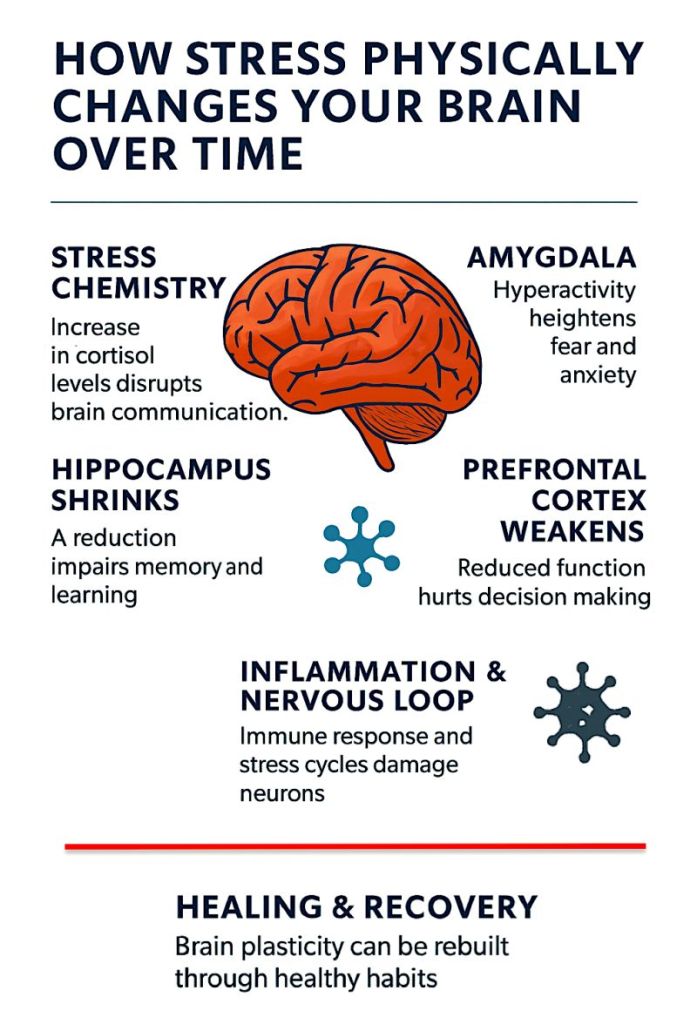
The literature suggests that many police officers lack active coping skills and emotional resilience that may be protective to the harsh effects of high acuity and high lethality call volume. Resilience training and cognitive behavioral strategies have a positive role in lowering traumatic stress (Evans et al. 1993). Understanding the HPA system (at left) brings to life the importance of managing stress for a lifetime. Wellness should be built in to every aspect of first response.
It is the connection with the autonomic nervous system (ANS) and limbic system that have the potential for long-tern physical injury. With a large number of LEO’s suffering with PTSD or other behavioral health variants it is essential to lower the reactivity of the HPA fight-flight response when under stress (Blechert, 2007). It is an essential system in the brain and body to understand when working with someone presenting with a stress injury like PTSD.
Chronic exposure to the fight/flight response to real or perceived threat can be debilitating physically and mentally (Sherin and Nemeroff, 2011). The neurobiology of stress and PTSD is being studied and may be linked to primitive brain circuits involved in the fear conditioning response and its eventual, sometimes refractory extinction or habituation of on-going perceived threat (Do Monte, Quirk, Li, and Penzo 2016). Have you noticed that off-duty police officers can be among the most suspicious people you can meet. Police work carries with it a neurobiological underpinning that is well documented in the literature on the abnormal fight-flight response. Chronic exposure to traumatic scenes and a host of other factors gradually elevate the hypothalamus-pituitary-adrenal (HPA) axis in the brain and body of typical career LEO’s.
The cumulative exposure to repeated, high stress calls has implication for the well-being of law enforcement personnel. Exposure to dead bodies, domestic violence, motor vehicle crashes and gunshot victims are just a few of the underpinnings of emotional dysregulation due to stress and stems from neurobiological changes in the brain that occur over time (Sherin & Nemeroff, 2011). These add to police officer hypervigilance and dysregulation. It also leads to negative physical and behavioral health effects of elevated stress hormones like cortisol and adrenaline as reported by Anderson, Dorei, Papazoglou and Arnetz, 2016.
“Tough job personnel, cops especially, have a reputation for shunning mental health services, perceiving its practitioners as softies and bleeding hearts who help rotten criminals go free with wussy excuses or overcomplicated psychobabble” (Laurence Miller, 1995, p. 596).
“This elevated attentiveness or hypervigilant perceptual style has a law enforcement officer in an elevated physiological state merely by assuming his occupational role” according to Gilmartin (1986). This results from nearly constant need to scan the environment for threats and an inability to habituate the stimuli when not essential for survival. Many officers have difficulty lowering their guard even when off the job.
Gilmartin identified police officers as commonly having elevated Cynicism as measured by the MMPI-II. Something like cynicism, posttraumatic embitterment (PTED) is a condition that results from the experience of having powerful reaction to negative life events (Linden M, Baumann K, Lieberei B, Rotter M (2009). Stress and burnout have a large impact on law enforcement job performance, career satisfaction and psychological strain according to Lambert et al. (2018). Each of these factors can lead to police-community friction.
The stress response and sympathetic arousal are identified with circuits of the limbic system including the afferent and efferent projections to and from the amygdala (HPA) as just described. There are things that LEO’s must do to reduce the impact of these neurobiological changes. These include regular exercise, mindfulness, nutritional lifestyle changes, and reduced use of alcohol and drugs. At the same time the cumulative stress across the career span has the potential for significant changes in officer wellness over the course of one’s career.
- Operational trauma (fatal crashes, child abuse cases, violent assaults, suicides)
- Hypervigilance that doesn’t “switch off” after shift
- Shift work and sleep disruption
- Organizational stressors (mandatory overtime, policy changes, court appearances)
- Career-stage stressors (promotion competition, cynicism, embitterment)
- Personal life transitions (marriage, parenting, mortgage obligations)
Research in occupational stress shows that organizational stressors (politics, lack of perceived support, workload) can sometimes have as much or more impact than critical incidents themselves leading to cynicism and moral indignation.
I have proposed a project to reduce co-occurring major depression, posttraumatic embitterment, and elevated somatic symptoms to add to physical wellbeing and lower officer risk for burn-out and other physical maladies. Families should be engaged in the process and can be useful in getting troubled officers into detox and eventually psychotherapy.



Leave a comment