

MICHAEL SEFTON, PhD.
As Grace Gatpandan, spokesperson for the San Francisco Police Department, has noted, “When officers are faced with a deadly situation, when there is a gun pointed at a cop, there is no time to go into mental health measures.” This reality underscores the importance of identifying and addressing risk factors before situations escalate to the point where immediate, life-threatening force becomes the only option. Get ready to see the red flag warnings before a lethal event occurs.
As our understanding of intimate partner violence continues to evolve, prevention strategies must evolve alongside it. Domestic violence homicide is rarely a spontaneous or unpredictable act. Rather, it is typically preceded by a recognizable pattern of escalating behaviors, identifiable risk factors, and missed opportunities for intervention. These indicators often emerge over time, providing opportunities for law enforcement, the courts, healthcare providers, victim advocates, and other professionals to recognize escalating danger and intervene before violence becomes lethal. Identifying these warning signs is essential for improving risk assessment, informing timely intervention, and ultimately preventing domestic violence homicide.

Future prevention efforts should move beyond responding to violence after it occurs and instead emphasize the early identification of pre-incident indicators associated with heightened lethality risk. Identifying and addressing these warning signs during the escalation process creates opportunities to interrupt the progression toward fatal violence before it culminates in homicide. In carefully identified high-risk cases, effective risk management may require intensive offender supervision, enhanced judicial oversight, electronic monitoring, legally authorized firearm removal, coordinated behavioral health services, and multidisciplinary case management. The objective is not merely to respond to incidents of domestic violence but to prevent the lethal acts of violence that claim the lives of intimate partners, children, responding law enforcement officers, bystanders, and, in some cases, the perpetrators themselves.
Violence can never be predicted with complete certainty. Human behavior is shaped by a complex interaction of biological, psychological, developmental, interpersonal, environmental, and situational factors, making precise prediction impossible. Nevertheless, decades of forensic, criminological, and behavioral science research have consistently demonstrated that a documented history of violent behavior is among the strongest and most reliable predictors of future violence. Accordingly, contemporary violence prevention emphasizes structured risk assessment rather than prediction, using empirically supported risk factors to identify individuals at elevated risk, prioritize intervention, and inform evidence-based strategies designed to reduce the likelihood of future lethal violence.
As our understanding of intimate partner violence continues to evolve, prevention strategies must evolve alongside it. Domestic violence homicide is rarely a spontaneous or unpredictable act. Future prevention efforts should move beyond responding to violence after it occurs and instead emphasize the early identification of pre-incident indicators associated with heightened lethality risk. Identifying and addressing these warning signs during the escalation process creates opportunities to interrupt the progression toward fatal violence before it culminates in homicide. In carefully identified high-risk cases, effective risk management may require intensive offender supervision, enhanced judicial oversight, electronic monitoring, legally authorized firearm removal, coordinated behavioral health services, and multidisciplinary case management. See the stages of abuse below:
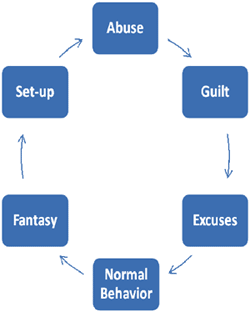
The objective is not merely to respond to incidents of domestic violence but to prevent the lethal acts of violence that claim the lives of intimate partners, children, responding law enforcement officers, bystanders, and, in some cases, the perpetrators themselves. Police officer’s enter family homes nightly and observed for the signs of disorder or chaos. Most often everything is in order when police arrive.
Ultimately, reducing domestic violence homicide requires a coordinated, multidisciplinary approach that integrates law enforcement, the courts, probation and parole agencies, victim advocacy organizations, healthcare providers, behavioral health professionals, and community-based service providers. No single agency possesses all of the information or resources necessary to effectively identify and manage high-risk cases. Information sharing, evidence-based risk assessment, coordinated safety planning, and timely intervention are essential components of a comprehensive prevention strategy. When agencies work collaboratively, opportunities to identify escalating risk are strengthened, intervention options expand, and the likelihood of preventing future violence increases.
Equally important is the continued advancement of research, professional training, and public policy informed by empirical evidence rather than assumption or anecdote. As our understanding of the dynamics of intimate partner violence continues to improve, prevention efforts must remain adaptable, incorporating emerging research on offender behavior, coercive control, trauma, victim safety, and violence risk assessment. Ongoing evaluation of intervention strategies is necessary to ensure that limited resources are directed toward practices that demonstrably reduce recidivism and improve victim safety.
Although no assessment process can eliminate uncertainty or prevent every act of violence, the evidence overwhelmingly demonstrates that many domestic violence homicides are preceded by identifiable warning signs and escalating patterns of behavior. Recognizing these indicators, responding decisively to elevated risk, and coordinating interventions across systems offer the greatest opportunity to prevent lethal violence. The goal is not to predict the future with certainty but to identify circumstances in which the risk of serious harm is sufficiently elevated to justify proactive intervention.
Every domestic violence homicide prevented represents not only a life saved but also the preservation of families, communities, and public trust in the institutions charged with protecting those most at risk. Importantly, be present for those who are victims of intimate partner violence. Ask questions if they are a members of your family. People do not just ‘snap’. Lethal violence rarely occurs out of the blue and there are frequent red flags we must get better at seeing risk and calling it what it is.


Leave a Reply